
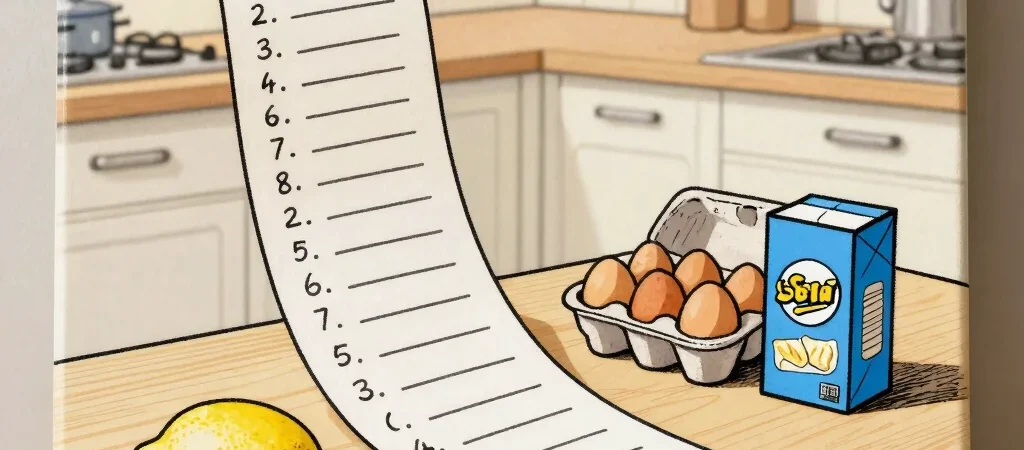
A grocery list begins as a modest document: milk, bread, eggs. Then you remember the lemon, add “something for lunch,” and stare at the fridge long enough to create a second page. By the time you leave, you’re carrying a shopping itinerary with the emotional range of a family saga.
A plot twist in produce
The list’s first plot twist usually happens in the kitchen. You write “tomatoes,” then discover there are already tomatoes, but they’re the kind you bought for a recipe you no longer remember. So the list gets a question mark, which is less an instruction than a tiny note from your past self.
The mysterious cracker clause
Some entries are clear: rice, coffee, dish soap. Others arrive with the confidence of a clue in a detective novel: “the good crackers.” Good according to whom? Your memory offers a blurry image of a blue box and the sense that the other crackers were somehow disappointing.
Give the list an ending
A useful list doesn’t need literary polish; it needs to survive the trip from counter to store. Group the obvious things together, write down the brand or flavor when it matters, and leave a little space for the item you’ll remember in the parking lot. If “the good crackers” still makes the cut, at least add a color.